“From being told surgery and chemotherapy were no longer options, with even survival a distant hope, to now being able to speak and eat again — proton radiotherapy has given me a second life!” said Mr. S (pseudonym), a 69-year-old patient with late-stage laryngeal cancer from Mongolia, expressing deep gratitude for his remarkable recovery.
Case Profile
- Condition
- Late-stage laryngeal cancer with severe pulmonary hypertension
- Patient
- Mr. S
- Age
- 69
- Hospital
- Peking University Cancer Hospital
- Nationality
- Mongolia
Case Overview
“From being told surgery and chemotherapy were no longer options, with even survival a distant hope, to now being able to speak and eat again — proton radiotherapy has given me a second life!” said Mr. S (pseudonym), a 69-year-old patient with late-stage laryngeal cancer from Mongolia, expressing deep gratitude for his remarkable recovery.
Cause & Challenge
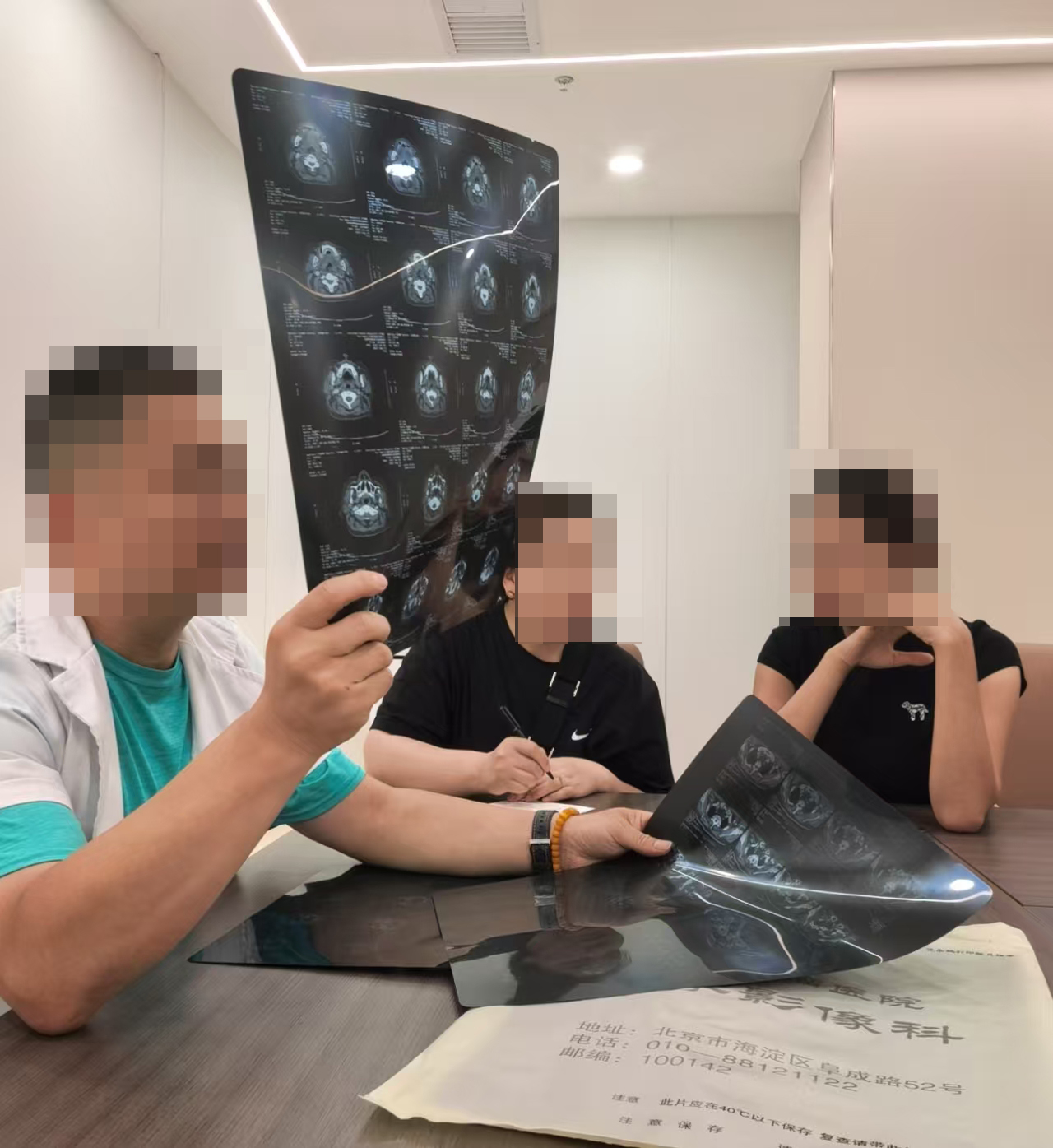
Mr. S had a nearly 40-year history of heavy smoking. After experiencing persistent hoarseness, sore throat, and difficulty swallowing, he sought medical care across multiple hospitals in Mongolia, South Korea, and Turkey, where he was diagnosed with late-stage laryngeal squamous cell carcinoma. Seeking a higher-standard treatment plan, he came to Beijing with full assistance from Harbor Health and was admitted to Peking University Cancer Hospital. After admission, the hospital conducted a comprehensive and detailed systemic evaluation and discovered severe pulmonary hypertension, further complicating an already challenging treatment case. To clarify the etiology, risk level, and impact of Mr. S’s pulmonary hypertension on laryngeal cancer treatment, Harbor Health promptly organized a multidisciplinary team (MDT) consultation with cardiovascular experts from Fuwai Hospital in Beijing. Following thorough assessments by specialists in surgical oncology, cardiovascular medicine, radiology, pathology, and other fields, the conclusion was definitive: due to severe pulmonary hypertension, Mr. S had extremely low cardiopulmonary functional tolerance. He could not withstand radical laryngeal cancer surgery, and conventional chemotherapy could trigger acute exacerbation of pulmonary hypertension, which was life-threatening. Both surgery and chemotherapy — the two core treatment pathways — were ruled out. Developing a safe and effective treatment plan became a critical challenge for the medical team.

Why China
Harbor Health connected the patient with appropriate Chinese medical resources, coordinated expert review, hospital access, interpretation, and treatment planning based on the case needs.
Treatment & Benefits
Staged stabilization and precise proton radiotherapy.
Full Story
Mr. S had a nearly 40-year history of heavy smoking. After experiencing persistent hoarseness, sore throat, and difficulty swallowing, he sought medical care across multiple hospitals in Mongolia, South Korea, and Turkey, where he was diagnosed with late-stage laryngeal squamous cell carcinoma. Seeking a higher-standard treatment plan, he came to Beijing with full assistance from Harbor Health and was admitted to Peking University Cancer Hospital. After admission, the hospital conducted a comprehensive and detailed systemic evaluation and discovered severe pulmonary hypertension, further complicating an already challenging treatment case.
To clarify the etiology, risk level, and impact of Mr. S’s pulmonary hypertension on laryngeal cancer treatment, Harbor Health promptly organized a multidisciplinary team (MDT) consultation with cardiovascular experts from Fuwai Hospital in Beijing. Following thorough assessments by specialists in surgical oncology, cardiovascular medicine, radiology, pathology, and other fields, the conclusion was definitive: due to severe pulmonary hypertension, Mr. S had extremely low cardiopulmonary functional tolerance. He could not withstand radical laryngeal cancer surgery, and conventional chemotherapy could trigger acute exacerbation of pulmonary hypertension, which was life-threatening. Both surgery and chemotherapy — the two core treatment pathways — were ruled out. Developing a safe and effective treatment plan became a critical challenge for the medical team.
After multiple rounds of discussions and verification, the medical team organized by Harbor Health finalized a strategy: “First stabilize the underlying condition, then deliver precise radiotherapy.” Cardiovascular medicine specialists first designed a personalized regimen to systematically manage Mr. S’s pulmonary hypertension and stabilize his cardiopulmonary function, creating safe conditions for laryngeal cancer treatment. Subsequently, the world’s most advanced proton radiotherapy technology was used to precisely target the laryngeal tumor, minimizing impacts on cardiopulmonary function and surrounding healthy organs.
Proton radiotherapy is internationally recognized as the most advanced tumor radiation therapy. It uses positively charged proton beams whose energy release is precisely controlled to achieve targeted killing of tumor cells. Compared with conventional photon radiotherapy, proton radiotherapy’s unique advantage lies in its physical “Bragg peak” property: the proton beam releases little energy before reaching the tumor, delivers its full energy sharply at the tumor site to form an energy peak, and its energy drops to nearly zero after passing through the tumor. Like a “precision ground-penetrating missile,” it accurately destroys cancer cell DNA while maximally protecting normal tissues in front of and behind the tumor, fundamentally reducing treatment side effects.
For Mr. S’s special condition, the advantages of proton radiotherapy are particularly prominent. Conventional photon radiotherapy covers a broad area and unavoidably irradiates healthy tissues around the larynx, potentially impairing cardiopulmonary function — an extremely high risk for a patient with severe pulmonary hypertension. In contrast, proton radiotherapy precisely controls the irradiation field, dose, and angle to target only the laryngeal tumor, causing almost no damage to adjacent healthy tissues and no additional burden on the heart and lungs. It is currently the most suitable option for him. Furthermore, proton radiotherapy features mild side effects and a painless treatment process, greatly improving quality of life during treatment.
After confirming the treatment plan, the medical team used an advanced proton treatment planning system with 3D reconstruction technology to accurately outline the boundaries between the tumor and surrounding healthy tissues. A personalized radiotherapy plan was developed to precisely control proton beam dose, angle, and coverage, ensuring adequate therapeutic dose to the tumor while fully protecting sensitive organs such as the vocal cords, parotid glands, heart, and lungs, balancing efficacy and safety.
Harbor Health reminds that proton radiotherapy is not suitable for all cancer patients. Its core indications are solid tumors, especially for the following groups:
1. Pediatric and adolescent solid tumors:
As children are in a developmental stage, proton radiotherapy maximally protects normal organs and reduces adverse impacts on growth and development.
Common types:
- Brain: medulloblastoma, ependymoma, low-grade glioma, craniopharyngioma
- Systemic: neuroblastoma, rhabdomyosarcoma, retinoblastoma, spinal and paraspinal sarcoma, localized Hodgkin lymphoma
2. Tumors in critical locations (intracranial, skull base, central nervous system, adjacent to brainstem, optic nerve, spinal cord):
Surrounded by irreplaceable delicate neural structures, conventional radiotherapy risks blindness, hearing loss, brainstem necrosis, or cognitive impairment. Proton therapy provides millimeter-level precision protection.
Common types:
- Meningioma, pituitary adenoma, skull base chordoma / chondrosarcoma, glioma, trigeminal schwannoma
3. Complex head and neck tumors (protecting salivary glands, optic nerve, auditory nerve, swallowing function):
Conventional radiotherapy frequently causes dry mouth, loss of taste, dysphagia, and hearing damage. Proton therapy significantly reduces functional sequelae.
Common types:
- Nasopharyngeal carcinoma, adenoid cystic carcinoma, nasal and paranasal sinus carcinoma, laryngeal cancer, oral cancer, orbital tumor, choroidal melanoma
4. Adult solid tumors requiring strict organ preservation:
Common types:
- Thoracic tumors (near heart, great vessels, spinal cord, lungs)
- Abdominal and pelvic tumors (adjacent to gastrointestinal tract, kidneys, bladder, rectum, spinal cord)
- Localized liver cancer (adequate liver function, no extensive portal vein invasion): protects normal liver tissue
- Prostate cancer: precisely protects bladder and rectum, greatly reducing urinary and bowel sequelae
- Pancreatic cancer, retroperitoneal sarcoma, adrenal tumor, localized cervical cancer
- Spinal, paraspinal, bone and soft tissue sarcomas
5. Advanced cancer patients unable to tolerate surgery or chemotherapy, such as Mr. S with severe comorbidities:
Proton radiotherapy has mild side effects and can control tumors safely.
6. Patients with recurrent tumors, especially those previously treated with radiotherapy:
Proton radiotherapy reduces repeated damage to pre-irradiated healthy tissues.
Note: This international medical case was compiled from patient or family interviews. Important details and images have been protected to preserve privacy and data security.
For more information about medical travel to China or remote consultations with Chinese specialists, please contact Harbor Health.